
AI Food Packaging Design Generator

Pick the pack, describe the food, type the words to print, and get AI food packaging design for a pouch, jar, bar, tray or whole carton in about a minute.

  • Five image models
  • Pouch, jar label, bar wrapper, tray sleeve
  • Or a whole carton on its dieline
  • Credits shown before you start

AI Food Packaging Design

Food packaging designAI enhance
0 / 4000

Food packaging design ideas made with AI

Real AI-generated examples, each made with this generator. Click one to fill in its prompt, text, pack type and settings, then make it yours.

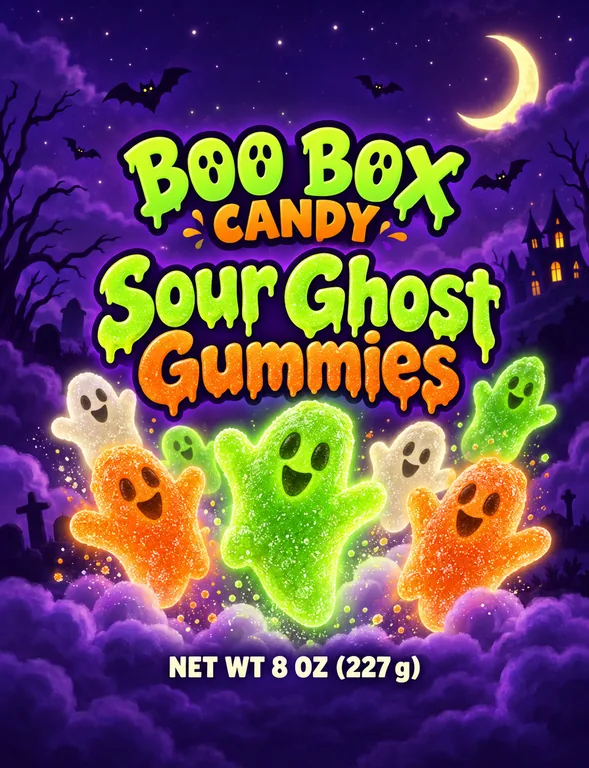
  • Halloween candy pouch for BOO BOX CANDY Sour Ghost Gummies, an AI-generated example made with GPT Image 2.5 Sunburst
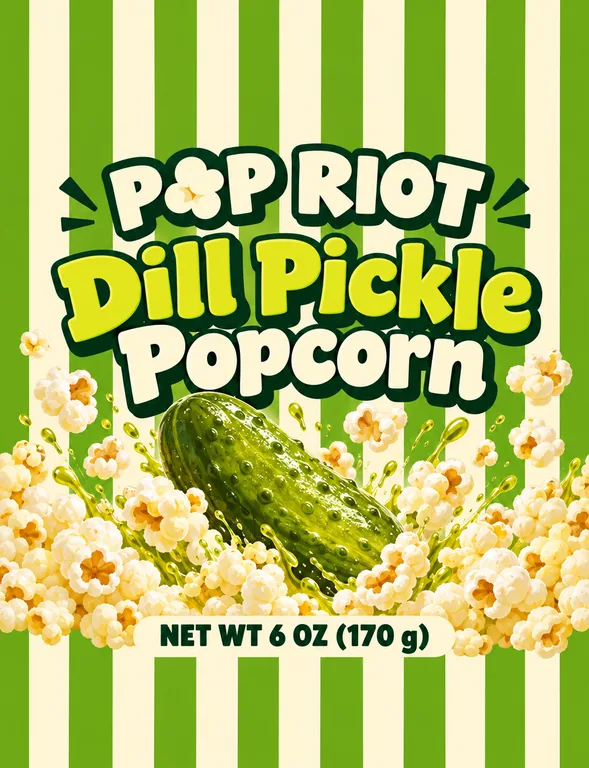
  • Popcorn pouch for POP RIOT Dill Pickle Popcorn, an AI-generated example made with GPT Image 2.5 Sunburst
  • Gelato bar wrapper for VELVET SPOON Tiramisu Gelato Bar, an AI-generated example made with Seedream 5.0 Pro
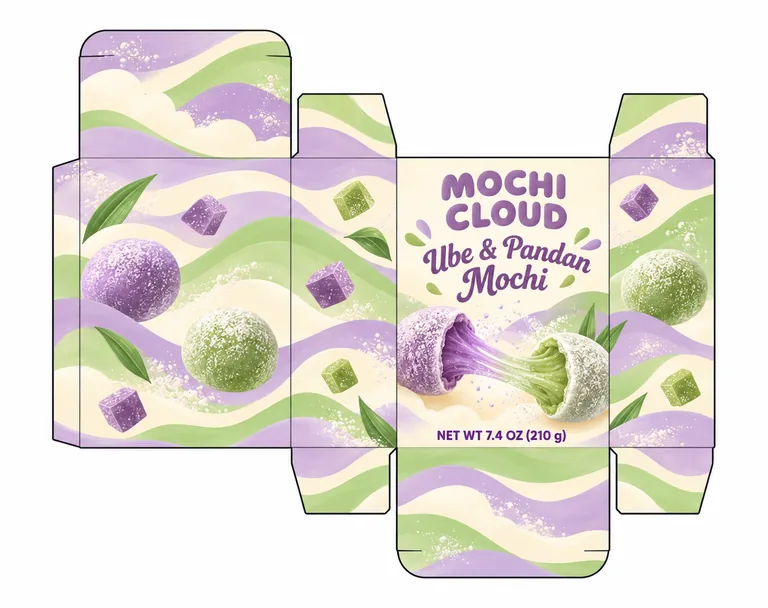
  • Mochi box (dieline) for MOCHI CLOUD Ube & Pandan Mochi, an AI-generated example made with GPT Image 2.5 Sunburst
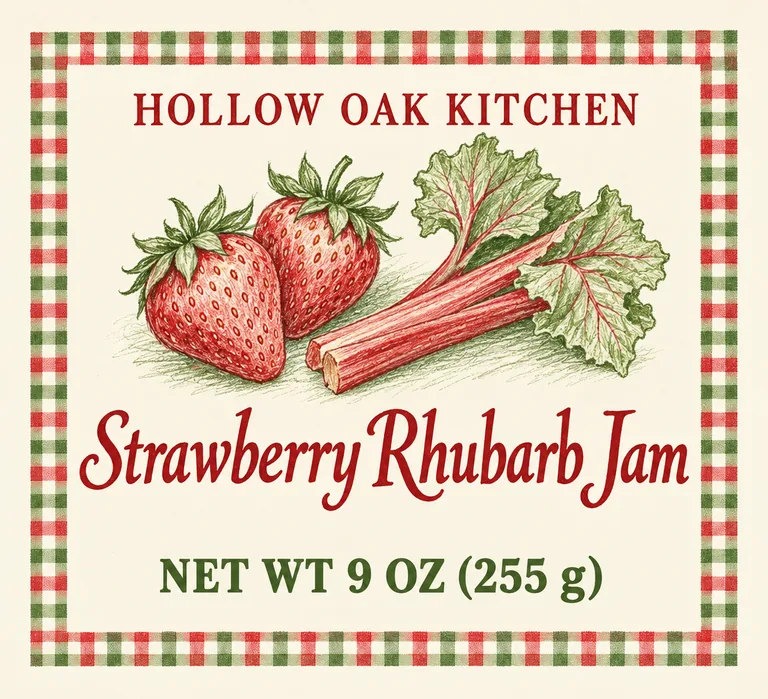
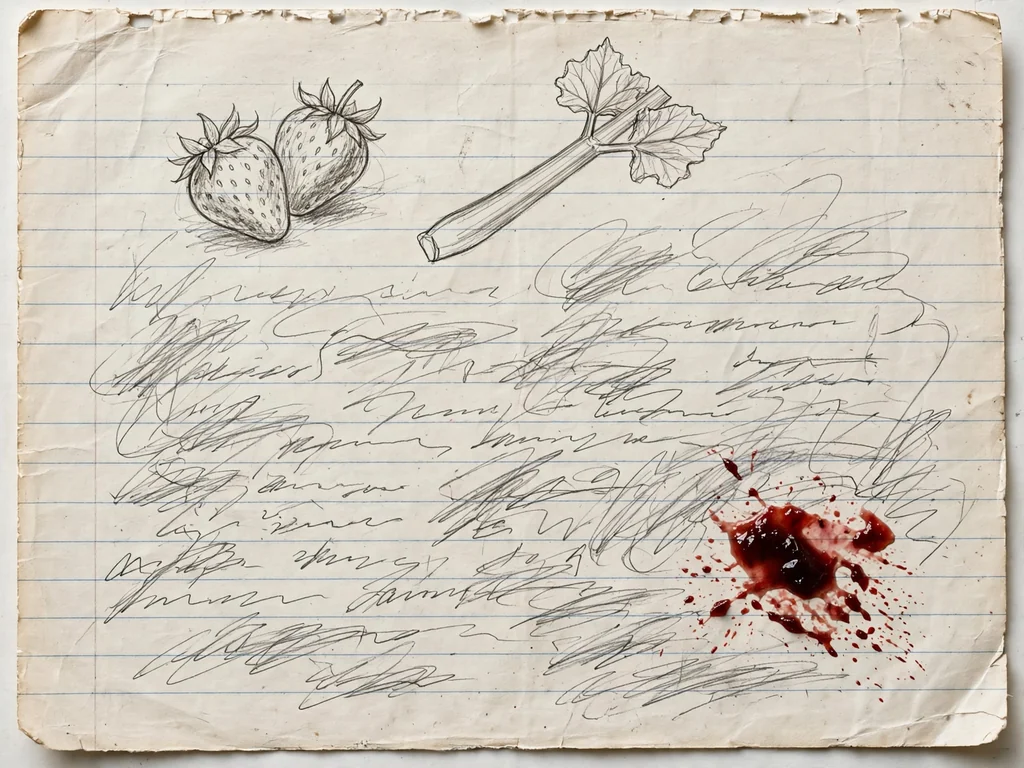
  • Jam jar label for HOLLOW OAK KITCHEN Strawberry Rhubarb Jam, an AI-generated example made with GPT Image 2.5 Sunburst
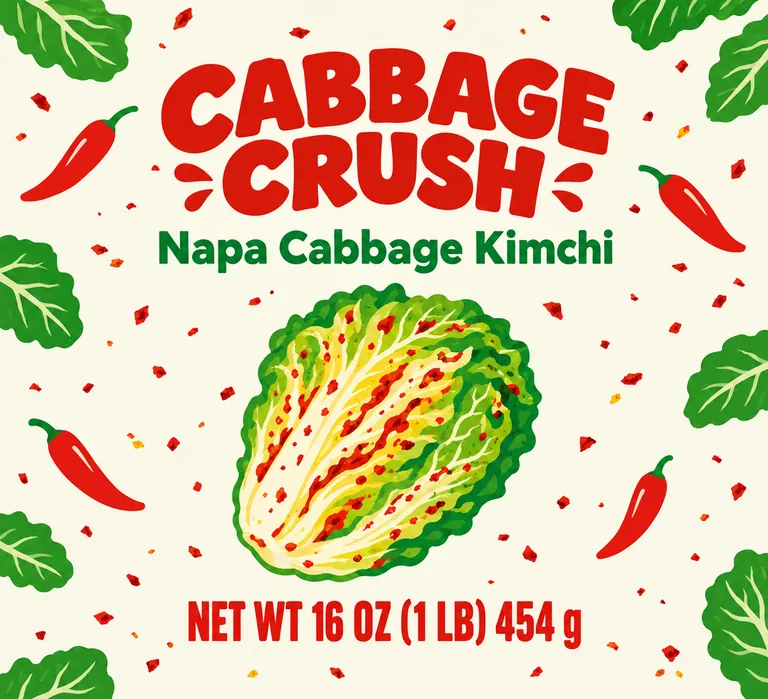
  • Kimchi jar label for CABBAGE CRUSH Napa Cabbage Kimchi, an AI-generated example made with GPT Image 2.5 Flare
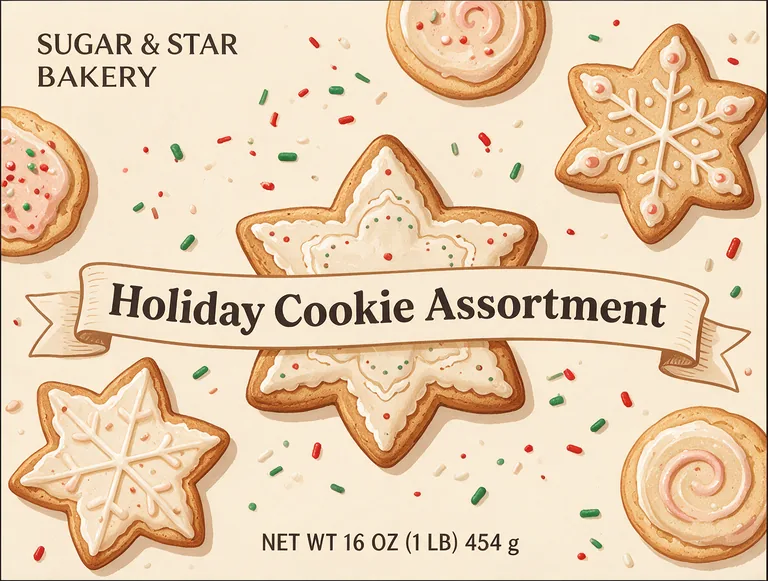
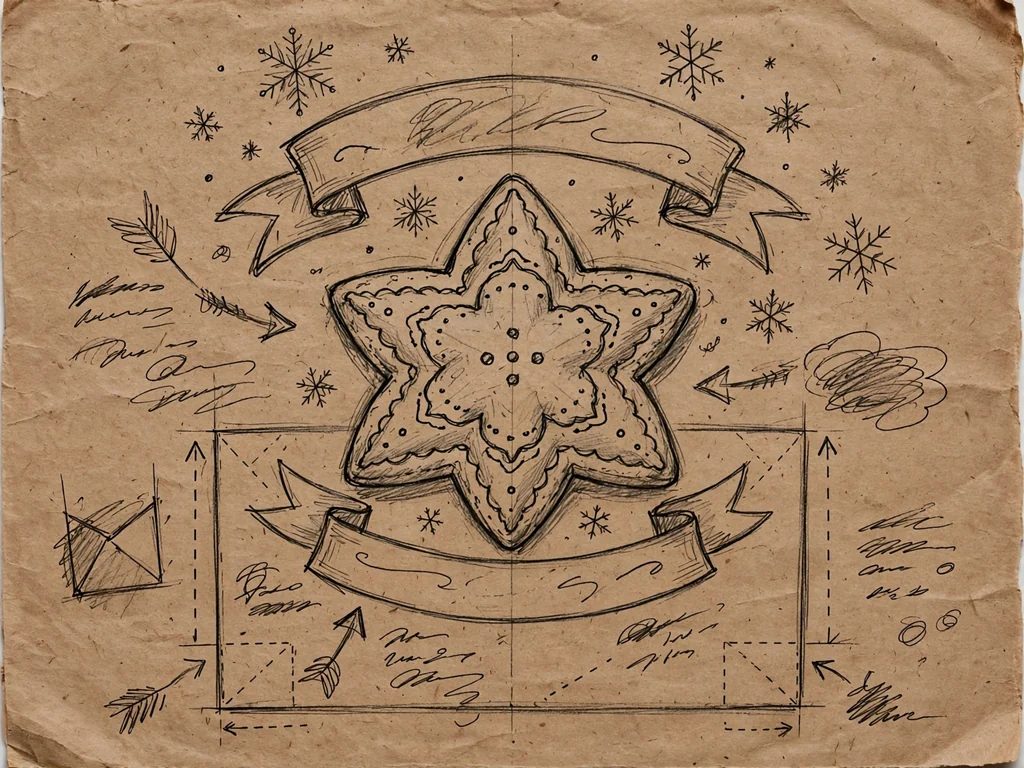
  • Cookie tray sleeve for SUGAR & STAR BAKERY Holiday Cookie Assortment, an AI-generated example made with Seedream 5.0 Pro
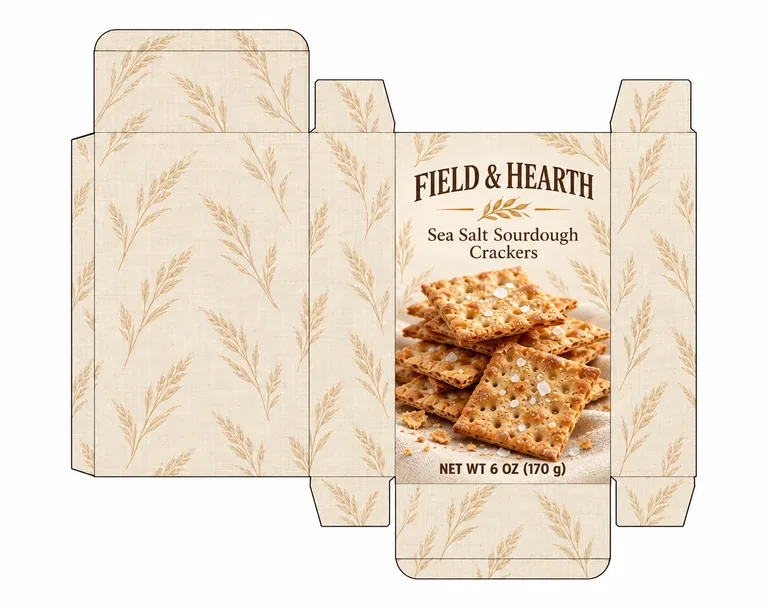
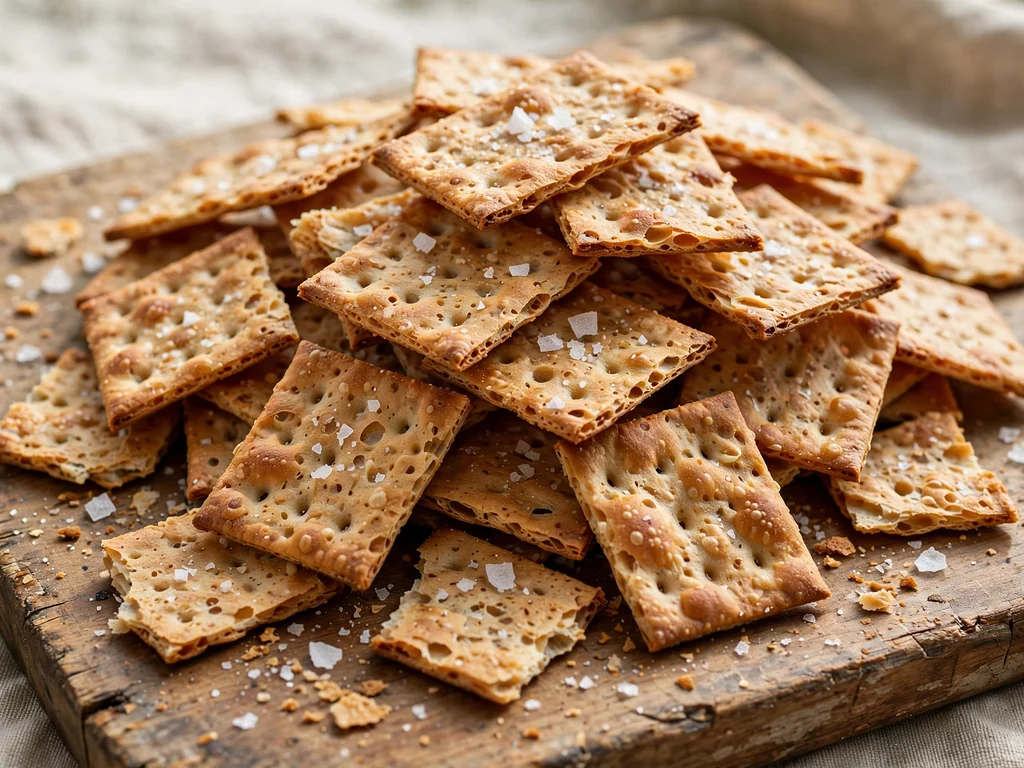
  • Cracker box (dieline) for FIELD & HEARTH Sea Salt Sourdough Crackers, an AI-generated example made with GPT Image 2.5 Sunburst

AI food packaging design is part of the paid plans; the free tools stay free. Credits for a run that fails are returned automatically. Image models can still misspell, so check every word and number before you print, and build regulated panels such as Nutrition Facts in our free tools.

image models, drafts from 2 credits
5
pack types at real sizes
4
box styles on a real dieline
4
bleed in the print PDF
1/8 in

How AI food packaging design works

Three steps take you from a recipe to food packaging design you can print, and the Generate button shows the credits before you press it.

What this food packaging design generator does for you

Built for food makers who need a pack that sells the taste and keeps to the label rules.

Halloween candy pouch for BOO BOX CANDY Sour Ghost Gummies, an AI-generated example made with GPT Image 2.5 Sunburst
AI-generated example · GPT Image 2.5 Sunburst

Four pack types, at print size

Each food packaging design is made at a real size you can change: a 7 × 9 in stand-up snack pouch, a 3.25 × 3 in mason jar label, a 6.5 × 3 in bar wrapper or the top of a sleeve for an 8.5 × 6.5 in meal tray. Seals, zippers and folds are kept free of words, and you download a print PDF with 1/8 in bleed, or a 300 dpi PNG.

Mochi box (dieline) for MOCHI CLOUD Ube & Pandan Mochi, an AI-generated example made with GPT Image 2.5 SunburstThe flat dieline sent to the model
Top left: the flat dieline sent to the model
AI-generated example · GPT Image 2.5 Sunburst

A whole carton on your dieline

Pick a reverse tuck end, straight tuck end, box with lid or drawer box and type its inside size. The flat dieline from our free dieline generator goes to the model first, so cartons, cake boxes and sweet boxes follow their panels.

Jam jar label for HOLLOW OAK KITCHEN Strawberry Rhubarb Jam, an AI-generated example made with GPT Image 2.5 Sunburst
AI-generated example · GPT Image 2.5 Sunburst

The net weight at its legal size

Image models set the net weight as fine print. Here every pack type and carton panel carries its minimum letter height from 21 CFR 101.7(i), told to the model as how wide the line should run, so the net weight comes out readable and at size.

Popcorn pouch for POP RIOT Dill Pickle Popcorn, an AI-generated example made with GPT Image 2.5 Sunburst
AI-generated example · GPT Image 2.5 Sunburst

Your words, printed as typed

Flavor names, brand names and net weights in two units go to the model in quotes, and AI enhance keeps them word for word, so Dill Pickle Popcorn stays Dill Pickle Popcorn.

  • GPT Image 2.5 FlarePrecise text, fasterfrom 10 credits
  • GPT Image 2.5 SunburstPrecise text, finer detailfrom 10 credits
  • Nano Banana 2.1Many references, extra widefrom 8 credits
  • Seedream 5.0 ProPhoto real, high resolutionfrom 11 credits
  • Muse ImageLow cost draftsfrom 2 credits

Five models in one menu

GPT Image 2.5 Sunburst (the default here) and Flare for precise text, Nano Banana 2.1 for many references, Seedream 5.0 Pro for glossy, appetizing food and Muse Image for 2 credit drafts. The button shows the total credits for 1 to 4 designs.

You type

Halloween gummy candy: glowing sour ghost gummies tumbling out of a deep purple night with tiny bats and a crescent moon, playful spooky type.

AI enhance writes

Flat print artwork for a tall rectangular stand-up snack pouch front, 7 x 9 in, edge to edge background, no package seals, zipper, notch, crimps, wrinkles, shadows, borders or mockup. Deep purple night sky background with a glowing crescent moon and tiny bat silhouettes. Hero: glowing sour ghost gummies tumbling out of the dark purple night, bright neon green, orange and pale white translucent gummies with sugary sparkle, appetite appeal, illustrated style. Brand at top in playful spooky bold letters: "BOO BOX CANDY". Product name large and bold, playful spooky type: "Sour Ghost Gummies". Net weight on its own bold capital line low on the front, about half the label width, spanning the width: "NET WT 8 OZ (227 g)". Keep all text inside the safe area, background only in top and bottom margins. No other words, no logos, no claims. The image is the label itself: its four edges are the cut lines. Fill it edge to edge with the label's background and artwork. The first reference image shows the label's safe area as a dashed line: put every word, number and logo inside it, at least 4% of the width in from the left and right edges, 20% of the height in from the top edge and 12% in from the bottom edge (1.75 in inside the cut at the top, 1 in at the bottom and 0.25 in at the sides); the last line of text, such as the volume, sits above the dashed line. The band between the dashed line and the edges holds background only, no words. Leave the top quarter and the bottom seventh of the image for background only, with no words there. Do not draw the lines, a border hugging the edges, or a card edge or shadow. Put the net quantity on its own line just above the bottom seventh of the image, never lower. Set it in bold capitals at least 3/16 in tall when printed, so the line spans about half of the label's width: a bold line, not fine print.

AI enhance for appetite appeal

A short line becomes a full food packaging design brief: how the food is shown, the color palette, the type and where the brand, product name and net weight sit on the pack you picked. Turn it off to send your own prompt as written.

What AI does well in food packaging design

Shoppers judge food with their eyes first, so most food packaging design is about appetite appeal: a close-up of the texture, the ingredients behind the flavor, or one bold color that stands for it. AI is quick at exactly that part. In a few minutes you can try a photo style hero, a flat illustration and a loud pattern for the same snack and keep the one that looks most like the taste.

It also makes seasonal editions cheap to test. A Halloween candy pouch, a holiday cookie sleeve or a summer gelato bar can be drafted at 2 credits a design with Muse Image before you spend anything on a designer, then made again at full quality on GPT Image 2.5 once the direction is set.
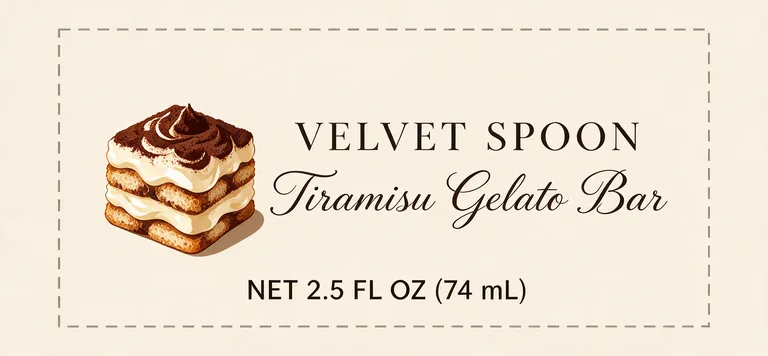
Gelato bar wrapper for VELVET SPOON Tiramisu Gelato Bar, an AI-generated example made with Seedream 5.0 Pro
AI-generated example · Seedream 5.0 Pro

Pouches, jars, bars, sleeves and cartons

Pick the pack here and the canvas of the food packaging design follows. The snack pouch starts at 7 × 9 in, the Packlane stand-up pouch with a 3 in bottom gusset for about four and a half cups of snacks; like a coffee pouch, it keeps words out of its top band (seal, tear notch and zipper) and its bottom inch, which curves under the gusset. The jar label is 3.25 × 3 in, the size Sttark suggests for mason jars. The bar wrapper is a 3 × 6.5 in hand-fill wrapper from The Pouch House laid on its side, with half an inch kept clear at each sealed end, and the tray sleeve is the top of a sleeve for an 8.5 × 6.5 in meal tray, whose long edges fold down to the sides.

Cartons suit cereal, crackers, frozen meals and baked goods: choose Whole carton and the design follows the panels of a real dieline. In a carton design the dieline in the image is a guide, not a print file. Open the same box in the free dieline generator, download its PDF or SVG and place the artwork under the cut and fold lines, with text inside the safe area. Most printers want CMYK, so ask yours to convert the artwork or do it in your design app.

Cookie tray sleeve for SUGAR & STAR BAKERY Holiday Cookie Assortment, an AI-generated example made with Seedream 5.0 Pro
AI-generated example · Seedream 5.0 Pro

Front panel and information panel in food packaging design

A US food label is split between two panels. The principal display panel is the part most likely to be seen on the shelf, and it must have room for its required text without crowding the design (21 CFR 101.1). It carries the name of the food in bold, parallel to the base and sized in relation to the biggest text there (101.3), and the net quantity as a separate item in the bottom 30 percent of the panel (101.7), in ounces with the metric amount beside them (15 U.S.C. 1453); frozen desserts go by volume, as in NET 2.5 FL OZ (74 mL).

The net quantity’s letters grow with the panel: at least 1/8 inch on a panel of 5 to 25 square inches and 3/16 inch up to 100 (101.7(i)). A 7 × 9 in pouch front is 63 square inches, so 3/16 inch; a 6.5 × 3 in bar wrapper is 19.5, so 1/8 inch. On a round jar the panel is 40 percent of the circumference times the label height (101.1), about 11 square inches for a pint jar, so 1/8 inch. The generator asks the model for these sizes in every food packaging design.

The information panel is the panel immediately to the right of the front as you face it (21 CFR 101.2). The ingredient list, the Nutrition Facts and the name and address of the maker, packer or distributor go there (or on the front), together, with no artwork between them and in letters at least 1/16 inch tall.

Kimchi jar label for CABBAGE CRUSH Napa Cabbage Kimchi, an AI-generated example made with GPT Image 2.5 Flare
AI-generated example · GPT Image 2.5 Flare

Nutrition Facts, allergens and flavor pictures

The Nutrition Facts panel has a fixed format, so never let an image model draw it. Build it in our free nutrition label generator and place the file on the information panel; the free food label maker sets out the ingredient list and the rest of that panel. The AI artwork is the look, and the regulated text comes from those tools.

Allergens follow the Food Allergen Labeling and Consumer Protection Act (FALCPA). As of October 2026 there are nine major food allergens: milk, eggs, fish, crustacean shellfish, tree nuts, peanuts, wheat, soybeans and sesame, which the FASTER Act added from January 1, 2023 (FDA). Each one is named in the ingredient list, as in lecithin (soy), or in a Contains statement right after the list.

Pictures count as well. If the pack names a flavor or shows a fruit, that becomes the characterizing flavor, and 21 CFR 101.22(i) decides whether the name must add words such as naturally flavored or artificially flavored. So ask the AI to show the ingredients the food really contains; the generator adds no claims or certification marks of its own.

How to brief AI for food packaging design

Name the food and the feeling: “sour gummy ghosts for Halloween, spooky but fun” beats “candy package”. The pack type you pick sets the shape, so the description can stay on the food. Put the words to print in the fields, not in the description, and add a photo of your real product as a reference so the AI paints your food and not a generic one.

GPT Image 2.5 Sunburst (10 credits at 1K) is the default: safe for text and strong on detail, and Flare is a little faster at the same price. Seedream 5.0 Pro (11 credits) is best at glossy, appetizing food: chili oil, steam, crumbs. Nano Banana 2.1 takes up to 9 references next to the pack’s guide, useful for a range that must match. Muse Image drafts at 2 credits; keep its text to three short lines. This page makes the flat artwork; a photo of the pack on a table is a mockup, which it leaves out.

From AI food packaging design to the shelf

Each food packaging design is made at its pack type and size. Open it to download a print PDF at the trim size plus 1/8 in bleed, with a TrimBox and its outline on a layer of its own, or a 300 dpi PNG. The art is an image, so check every word, number and claim at full size before printing, and for a long run have the net weight set as vector type.

Already laid out a jar label in our free label maker? Its Design with AI button sends a jam, honey, salsa or kimchi label here as a jar label at its own size: keep your layout and restyle it, or ask for background art only and keep your text and barcode as exact vectors on top. Selling in stores? Add a barcode from the free UPC barcode generator.

Each design costs credits by model and resolution, from 2 credits for a Muse Image draft to 22 for Seedream 5.0 Pro at 2K; plans start at 800 credits a month (pricing), and a failed run returns its credits. For coffee, try AI coffee bag design; for boxes of any kind, AI packaging design.

Who uses AI food packaging design

Food makers who want a pack that sells the taste before they pay for a print run.

Cottage food and market sellers

Give a jar or a bag a label that looks like a brand, then build the required facts with our free cottage food label maker.

Snack startups

Try snack packaging design directions for a first flavor in an afternoon, then hand the winner to a designer or a printer.

Seasonal and limited editions

Draft a Halloween, holiday or summer edition at 2 credits a design and keep the brand look across the range.

Frozen and chilled food brands

Use AI food packaging design for bar wrappers, tray sleeves and cartons of frozen and chilled lines, with the net weight at its legal size.

Food packaging design questions

What food makers ask before their first run.

Design food packaging with AI

How do I design food packaging?

Pick the pack type and size (pouch, jar label, bar wrapper, tray sleeve or a whole carton), then describe the food and the look and type the name and net weight in their own fields. Compare a few AI food packaging design options, then build the Nutrition Facts and ingredient panel in our free tools.

What has to be on a US food package?

The front carries the name of the food and the net quantity. The front or the information panel next to it carries the ingredient list with allergens, the Nutrition Facts and the name and address of the maker, packer or distributor.

How big does the net weight have to be?

It depends on the front panel’s area (21 CFR 101.7(i)): at least 1/16 inch up to 5 square inches, 1/8 inch up to 25, 3/16 inch up to 100 and 1/4 inch up to 400. The generator asks for the right size on each pack type.

Can AI make my Nutrition Facts label?

Not with an image model: it cannot guarantee the numbers or the format that 21 CFR 101.9 sets. Build the panel in our free nutrition label generator and place it next to the artwork.

What are the 9 major food allergens?

Milk, eggs, fish, crustacean shellfish, tree nuts, peanuts, wheat, soybeans and sesame, as of October 2026. Sesame was added from January 1, 2023.

Can the AI design on my box dieline?

Yes. Choose Whole carton, pick the style and type the inside size, and the flat dieline from our dieline generator goes to the model as the first reference image.

What makes snack packaging design stand out?

Show the food or its flavor big, give each flavor its own strong color so a range reads at a glance, and keep the name readable from a few steps away.

Is AI food packaging design free?

No. It is part of the paid plans because every design calls a paid image model, from 2 credits a draft. Our nutrition, label, barcode and dieline tools stay free.

Start your food packaging design

Describe the food, type the words to print and choose a pack or a whole carton. The AI food packaging design generator shows the credits before it starts.